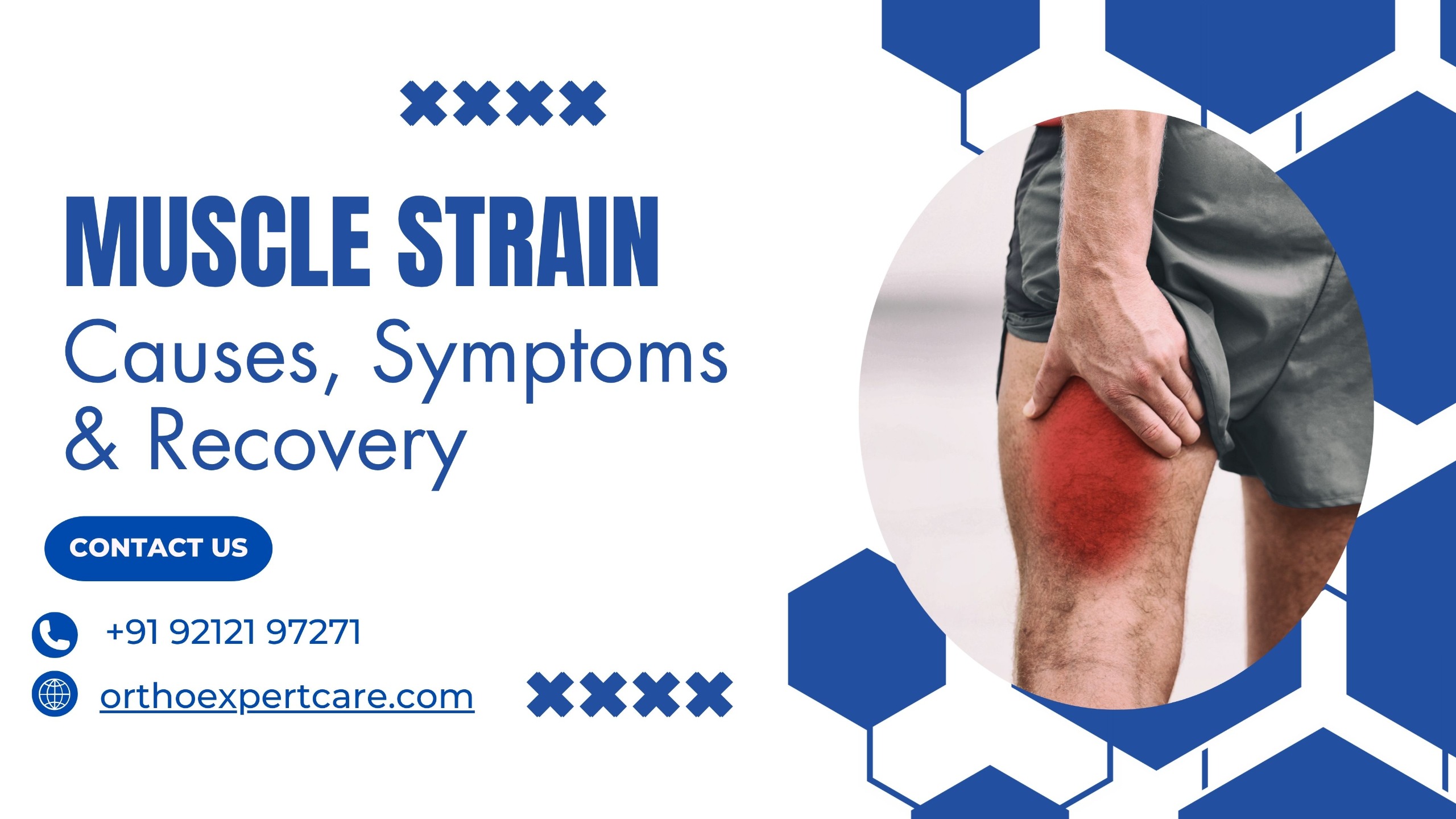
Muscle strain, commonly referred to as a pulled muscle, is one of the most frequent musculoskeletal injuries affecting people of all ages, from athletes to office workers. It occurs when a muscle or tendon—the tissue connecting muscle to bone—is overstretched or torn. While many people experience mild strains that heal within days, more severe strains can take weeks or even months to recover.
Understanding muscle strain causes, symptoms, treatment options, and recovery strategies is essential for effective healing and preventing future injuries. Dr. Ajay Mittal at OrthoExpertCare, a leading orthopedic specialist, emphasizes a structured approach for both treatment and prevention to ensure patients regain strength and mobility safely.
What Is a Muscle Strain?
Lorem ipsum dolor sit amet, consectetur adipiscing elit. Ut elit tellus, luctus nec ullamcorper mattis, pulvinar dapibus leo.
- Mild (Grade 1): A few muscle fibers are damaged, causing mild discomfort and minimal functional loss.
- Moderate (Grade 2): More fibers are torn, resulting in significant pain, swelling, and restricted movement.
- Severe (Grade 3): A complete tear of the muscle or tendon, often requiring surgical intervention and extended rehabilitation.

Pulled muscles are most common in the back, hamstrings, quadriceps, and shoulders, often due to sudden or excessive physical activity.
Causes of Muscle Strain
Muscle strains can occur due to various factors. Identifying the cause helps in prevention and proper treatment:
- Overuse or Repetitive Movements
Performing repetitive actions, like running, cycling, or lifting, can strain muscles over time. - Sudden or Forceful Movements
Quick twisting, jerking, or sudden heavy lifting can overstretch muscle fibers. - Inadequate Warm-Up
Skipping warm-up exercises increases the likelihood of muscle injury. Warm muscles are more flexible and less prone to tearing. - Muscle Fatigue
Tired muscles cannot absorb force as effectively, increasing susceptibility to strains. - Poor Flexibility
Tight muscles or limited range of motion can lead to overstretching during physical activity. - Improper Technique
Using the wrong posture during exercise or daily activities can put excessive stress on muscles.
Dr. Ajay Mittal at OrthoExpertCare highlights that lifestyle factors like sedentary behavior, poor ergonomics, and inadequate hydration can also contribute to muscle strain injury risk.
Symptoms of Muscle Strain
Muscle strain symptoms can range from mild discomfort to severe pain and mobility limitations. Recognizing them early is critical for timely intervention:
- Pain or Tenderness: Usually immediate and localized at the injury site.
- Swelling: Caused by inflammation in the damaged muscle tissue.
- Bruising or Discoloration: Internal bleeding may lead to visible bruising.
- Limited Range of Motion: Difficulty moving the affected area without pain.

Diagnosis of Muscle Strain
A proper diagnosis ensures effective treatment. Dr. Ajay Mittal at OrthoExpertCare recommends:
- Physical Examination: Assessing pain, swelling, and range of motion.
- Medical History: Understanding the circumstances of the injury and prior muscle issues.
- Imaging Tests (if needed): MRI or ultrasound may be used for severe strains to evaluate tissue damage.
Treatment and Muscle Strain Recovery
The treatment depends on strain severity and the patient’s lifestyle. Dr. Ajay Mittal emphasizes a combination of rest, therapy, and preventive care for optimal recovery:
1. Rest
Rest is crucial, especially in the first 48–72 hours. Avoid activities that worsen pain, but gentle movement can prevent stiffness in mild cases.
2. Ice Therapy
Applying ice packs for 15–20 minutes every 2–3 hours helps reduce swelling and inflammation in the first 48 hours post-injury.
3. Compression
Using elastic bandages or braces can minimize swelling and provide support, but ensure it’s not overly tight to avoid circulation problems.
4. Elevation
Elevating the injured area above heart level can reduce swelling and accelerate healing.
5. Heat Therapy
After 48 hours, heat therapy relaxes muscles and improves blood flow, supporting recovery.
6. Physical Therapy
Guided exercises improve flexibility, strength, and function. Therapists often recommend:
- Gentle stretching
- Resistance exercises
- Gradual return to normal activity
7. Medication
Over-the-counter anti-inflammatory medications like ibuprofen or acetaminophen can help manage pain and swelling.
8. Surgical Intervention (if needed)
Severe muscle tears (Grade 3) may require surgery, followed by structured rehabilitation.
Recovery Timeline
Recovery varies depending on the severity of the muscle strain:
Grade | Severity | Recovery Time |
Grade 1 | Mild | 1–2 weeks |
Grade 2 | Moderate | 3–6 weeks |
Grade 3 | Severe | Several months (may require surgery) |
Dr. Ajay Mittal advises patients to follow prescribed therapy and avoid rushing the process to prevent re-injury.
Prevention Tips
Preventing muscle strains is as important as treating them. Key strategies include:
- Warm-Up Properly: Engage in light exercises to prepare muscles.
- Strength Training: Build muscle strength to withstand stress.
- Stretching: Incorporate flexibility exercises into daily routines.

- Hydration: Maintain proper fluid balance to avoid cramps and fatigue.
- Proper Technique: Learn and maintain correct posture during exercises and daily activities.
- Adequate Rest: Avoid overexertion and allow muscles to recover between workouts.
Frequently Asked Questions (FAQs)
Q1: Can I exercise with a muscle strain?
A1: Mild strains may allow gentle movement, but it’s best to rest and avoid activities that exacerbate pain. Always consult a doctor for moderate or severe strains.
Q2: How long does a pulled muscle take to heal?
A2: Healing time varies: mild strains recover in 1–2 weeks, moderate strains in 3–6 weeks, and severe strains may take several months with possible surgery.
Q3: Are there home remedies for muscle strain?
A3: The R.I.C.E. method (Rest, Ice, Compression, Elevation) is effective for mild strains. Moderate or severe injuries require medical evaluation.
Q4: When should I see a doctor for a muscle strain?
A4: Seek medical attention if pain persists beyond a week, swelling worsens, or mobility is significantly affected. Dr. Ajay Mittal can provide accurate diagnosis and treatment.
Q5: Can muscle strain recur?
A5: Yes, improper healing, premature return to activity, or inadequate strengthening can lead to re-injury. Preventive exercises and proper care are essential.
Conclusion
Muscle strain is a common but manageable condition. With proper care, rest, and therapy, most patients fully recover. Early recognition of symptoms, timely treatment, and prevention strategies are key.
Experiencing a muscle strain? Contact Dr. Ajay Mittal at OrthoExpertCare today for expert evaluation and effective treatment.